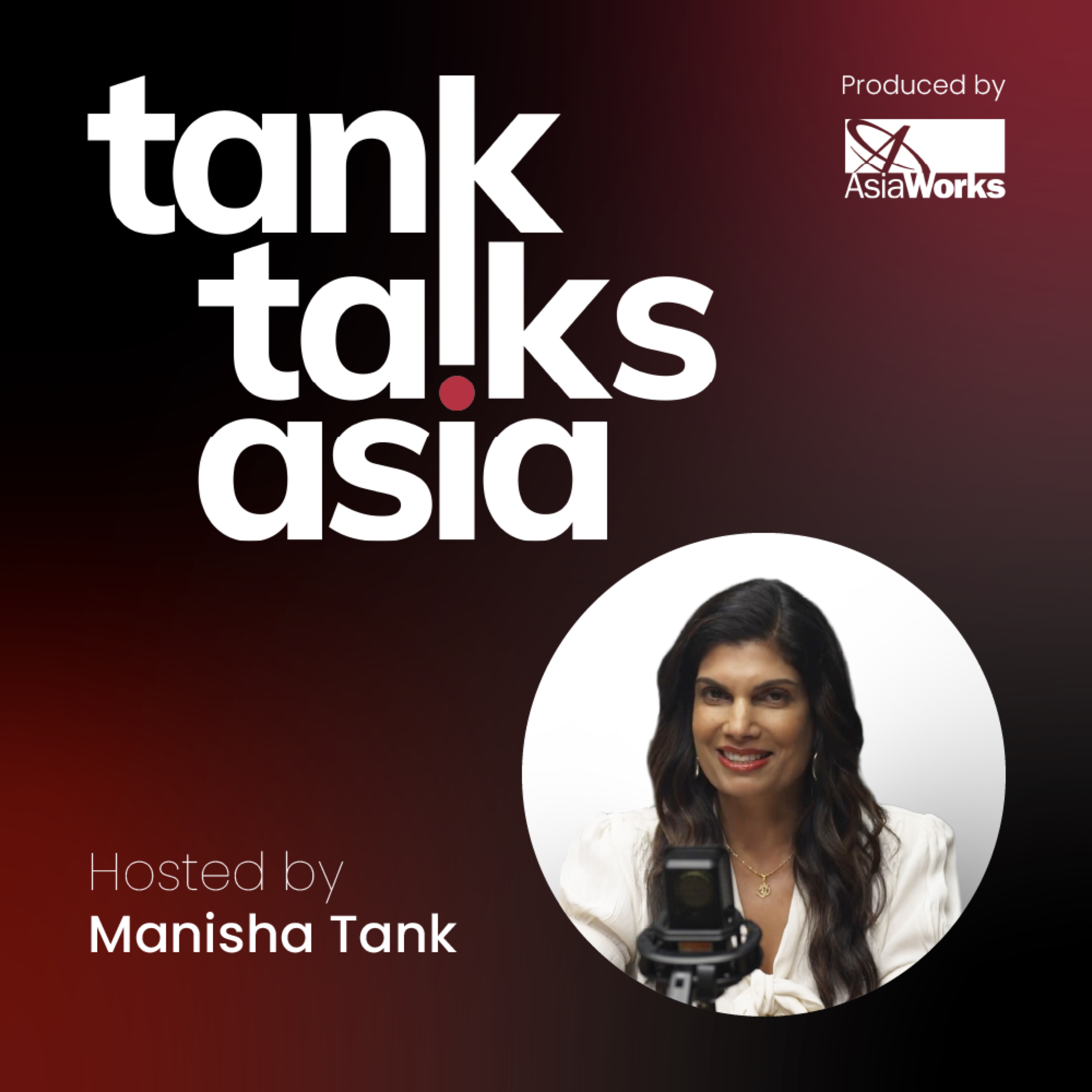
Episode 13
Is the West Declining? | Samir Puri & Joel Ng | Tank Talks Asia
In this episode of Tank Talks Asia, Manisha Tank is joined by Dr Samir Puri, author of “Westlessness”, and Joel Ng, editor of “The Dragon’s Emerging Order” to discuss whether the era of western dominance is coming to an end and, if so, what replaces it?
Their conversation covers everything from Mark Carney’s headline-making Davos speech and the global impact of Donald Trump’s presidency, to China’s multilateral rise, the conflict in Ukraine, and the future of the UN.
Featured Voices
Host: Manisha Tank
Guests: Samir Puri, Inaugural Director, Centre for Global Governance and Security, Chatham House, Author and Former UK Diplomat
Joel Ng, Senior Fellow and Head of Centre for Multilateralism Studies, S. Rajaratnam School of International Studies
Key takeaways
Samir and Joel assert that the global centre of gravity is shifting away from the west, as states adapt through multi-alignment rather than bloc politics.
They suggest China has been preparing for this moment, having built multilateral influence to position it centrally within this emerging order.
They say a shift towards regional security responsibilities is underway and that the US may not want to remain the world’s security guarantor.
They discuss the possibility that the war in Ukraine may end pragmatically, not ideally.
Samir and Joel talk about how the UN, which is set to appoint a new secretary general this year, is facing an existential test as the need for multilateralism grows.
They touch on whether climate cooperation may become a focal point for renewed global alignment, especially between Europe and China.
Chapter heads
A Defining Speech at Davos
Samir and Joel discuss how Mark Carney’s address at the World Economic Forum signalled a reset in global alignments and even echoed historic moments from the past.
Hedging as a Viable Strategy
Samir believes that Asian multi-alignment is becoming a model for western powers navigating US-China rivalry.
China’s Multilateral Architecture
Joel explains how Beijing has been building platforms, partnerships and institutional influence for decades.
Who Polices the World Now?
Samir and Joel give their views on the limits of American security guarantees and the rise of regional responsibility.
Ukraine and the Limits of Idealism
Samir says he thinks the war in Ukraine may end in pragmatic compromise rather than total victory.
Is the UN Still Fit for Purpose?
Samir and Joel debate what role the UN still has to play in a world of great power rivalry.
Climate in the Shadows
They discuss how the green agenda risks being buried and explore the potential for greater collaboration between China and Europe.
Looking to the Future
Samir and Joel weigh in on where multilateralism might be headed and why there are reasons to stay optimistic.
Useful links
https://www.hachette.co.uk/titles/samir-puri/westlessness/9781399722636/
https://rsis.edu.sg/research/cms/
https://www.un.org/un80-initiative/en
Don’t miss out
We’re on a mission to bring the real Asia — its thinkers, builders, dreamers, and disruptors — to global ears. So if you know someone who would be a great guest or want to contact the team, please email:
And don’t forget to follow, subscribe, and share so you don’t miss the next episode of Tank Talks Asia.
Tank Talks Asia is an AsiaWorks production.
Transcript
“We're supposed to decide on a new Secretary General to replace António Guterres this year. Can this said individual satisfy Donald Trump, Vladimir Putin, Xi Jinping, and all of these leaders of states that are fundamentally different views of the world with each other? And I think that the candidate that succeeds is going to be rather underwhelming, I'm afraid.”
Manisha: Hello, it's Tank Talks Asia. I'm Manisha Tank, a warm welcome from me and the rest of the team at the AsiaWorks Studio in Singapore. In this episode, we take a deep dive into geopolitics with an unapologetically Asian angle.
Navigating the waters we have Dr. Samir Puri. He wears many hats, including having been the inaugural director of the Center for Global Governance and Security at Chatham House in London. He's also a bestselling author, a former UK diplomat, and once a ceasefire monitor in Donbas. More on that later.
Meanwhile we also have with us, Joel Ng, a senior fellow at Singapore's S. Rajaratnam School of International Studies, where he heads up the Center for Multilateralism Studies. He's recently edited a book, essential reading for anyone trying to better understand China's role as a global superpower.
Well Samir, Joel, welcome to the Tank Talks Asia table. It's really good to have you both here. Samir, I think that this is a moment we should celebrate because you have returned to Singapore and you're gonna be here a while.
Samir: Yeah, I've just finished a year working at Chatham House in London and I'm back in Singapore, so really pleased to be back.
you because I met you back in:Samir: It was finished. It was out in, just before Trump came back, so 2024.
got off to a massive start to:I think we should jump straight in and talk about what's been happening on the global political stage. One for the textbooks is going to be what happened at the World Economic Forum in Davos, of course Mark Carney's speech.
In history, are there moments that you could compare it to? Joel, let's start with you.
Joel: Well, yes, Carney's speech was definitely historical. You know, they say that in great moments you remember where you were when something happened. I got this text in the middle of the night from my Canadian friend sending me the speech. So I'm always gonna remember that now. But his speech was historical.
I thought it was a bit like Reagan’s tear down this wall speech in the middle of the Cold War. We hadn't seen the collapse of the Soviet Union but he had made a grand statement of intent. And that's what Carney's done in a very similar way, made a statement of intent. We're going to reset these relationships, we're not gonna be passive in the bilateral relationship with the United States he meant, but also in the relations with China and so on.
And so a lot of countries, a lot of observers all took that in the same spirit and said, Carney's onto something. Let's see what we can make out of this.
Manisha: Samir, I was just gonna ask you straight, listening to his speech and knowing what Westlessness is about. I mean, were you thinking, come on mate, I could have told you this ages ago.
hill Iron Curtain speech from:Manisha: Yes.
Samir: Actually, an iron curtain’s descended in the transatlantic world between the US and the rest of the west. And actually, it's not that we have to fend for ourselves, but we have to look to how our partnerships can diversify.
And I think some people around the rest of the world will shrug their shoulders and say, well, I never romanticized the US in the first place, so how is this new? But I think really the impact is people in the rest of the west, especially those who are, dare I say, quite Americanized in how they've grown up in understanding the way the world works and where they think of kinship and support and solidarity, it's a shock, especially to the most transatlantically minded people.
Manisha: Yes.This idea that actually empires come and go, it's a very cyclical thing. So this is just the turn of another cycle. Joel, do you agree with that?
Joel: We often mistake the local politics, that everyday politics, with sort of the grand ideas or trend lines in international relations, which are going on regardless of the politics, right? So China, as my book explains, has been doing a lot of this order building around other parts of the world for a long time, decades in fact, before Trump came along and disrupted everything. That's why in this part of the world, where I think a lot of people were like, well Carney's not really saying that much new, we’ve all been saying it to varying degrees. But it's different when it comes from the heart of the sort of liberal ecosystem.
In that sense, this transition towards a new kind of clear, what was it? Value-based realism or something that he's been identifying, it doesn't look that much different from how a lot of our states, in this part of the world, have been operating their foreign policies.
Manisha: That gives me a really neat point to transition into local geopolitics. So all of this has been happening, it feels like over there. Meanwhile, how do you feel it's going down on this side of the world?
What is the significance of these speeches of the threat to Greenland at one stage from US President Donald Trump? The fact that the United States has swooped into Venezuela and arrested a president and his wife. How do these moments get interpreted in this part of the world, Samir, and then what can that lead to?
Samir: The thing that really strikes me is, anyone who works on the geopolitics of Asia, whether it's South Asia, Southeast Asia, they always understand that these states are hedging, which means they're not picking one side or the other. I've never liked that phrase 'cause I think being multialigned, having multiple relationships, is a viable strategy in and of itself.
I think the irony is now that you’ve got Canada, the UK, Germany, France. They are now hedging as well. Maybe not in the same way, not in the same risk analysis with regards to China and the US, of course it's independent depending on where you are in the world, but I think the rest of the west is catching up with some of the strategies that Asian states have been pursuing, in their own way for their very different reasons for quite a long time. And have sometimes been criticized for as well, which I also find quite interesting.
But I think this is where there'll be a bit of a leveling up, I think, in terms of the different perceptions in Europe, in Asia, around how to deal with a world in which you have this belligerent Trump, this growing power of China, but also, you know, war-like Russia and other forces that are pretty worrying to coexist with.
Manisha: Exactly. So we'll come to talk about that in a little bit. But Joel, so I read a little bit of The Dragon's Emerging Order, and the thing that struck me was we don't often hear commentators talking about China's multilateral approach to the world.
You are an expert in multilateralism and it's really interesting when you think about Mark Carney's speech and effectively what he's saying. Well, China's been doing that for a long time, hasn't it?
Joel: If you base your analysis on headlines, right, you don't see the underlying things going on behind those headlines. And China has been building these multilateral formats, platforms, summits where they are at the center, right? The Forum on China-Africa Cooperation, as the name suggests, it's China and the whole continent. This gives them a huge amount of, not just sway, which is part of the discourse that everyone accepts, but also a lot of buy-in with those member states because they've been actively engaged with these states around things that those states want to do. And China responding in a way that it sees as possible or practical.
I mean, China is not an infinite source of resources and public infrastructure. It does have scarcity problems as well. But to the extent that it can do things that those states want, you get what China has termed a win-win cooperation. So when you look at that, right, a lot of people are asking what's the future of this order when the United States is retreated from its original role and can China take up that role?
Now, there's a good and bad side. On the good side, China has already been doing some of this, right, and actually it's contributing far more than is usually publicly acknowledged, right? It's all usually in a discourse around infrastructure, which is fine, but that impact has a lot more ramifications than is usually accepted.
The second part is that actually it has its limitations. It cannot replace the United States in this role as international security guarantor and provider of public goods. The US role was just so enormous, right, that everyone is going to hurt from this withdrawal and the Chinese are not ready to fill that gap.
Manisha: To take up that mantle. I think that's really interesting because, Samir, often the US is referred to as the policeman of the world. What happens when you don't have a country that's playing that role anymore? Do we need hegemons in the world?
Samir: One of my chapters in Westlessness was from world policing to regional policing, and I think there was, that's a trend line where the US has published these two recent national security strategies and a national defense strategy in December and January and they both recognize the fact the US cannot be omnipresent in terms of its security architecture. So it's about prioritization. And I remember the passage from the National Defense Strategy very clearly in my head 'cause it says America will still be engaged in Europe, but it will prioritize the Western hemisphere and deterring China.
So these are the three, but it's not only three, there's also the Middle East as well. And who knows what happens with the US and Iran. So it will be dragged into things, but I think we are headed to a world in which different regional powers will have a greater stake in the security of those regions with either a light American footprint as they say, or no American presence.
Any allies and friends and partners of the US are now thinking, where is this withdrawal going to manifest the most dramatically? And is it me who's gonna be asked to step into the breach or will somebody else step in to fill the void of providing security?
Manisha: One of the things that Donald Trump was saying was, look, NATO should stump up more money and be paying for its own security. The world has changed. So you could say the world has become more multilateral, in some aspects, but at the same time, isn't it justified for, and I dunno who wants to take this question, but isn't it justified to some extent to say pay for yourselves, pay for your own security to a greater extent?
Joel: Well, it depends on who the threat is, right? If you're defending against a superpower, let's say the size of Russia, no single state could do that, right? It's a superpower because there are no other superpowers.
Manisha: But you're talking about the European Union, a multilateral organization.
Joel: That's right. If you are talking about sort of non-traditional security threats, the other kinds of threats that we now find, COVID, foods insecurity, environmental change, those kind of threats do still entail cooperation. And yes, those states should be willing to put up the resources to do that.
Of course, we look at Carney and Canada, it's a big state reacting. But the small states have been doing all of this reaction and responding for quite some time because they felt as the international order changed, whether it was because of COVID or because of unilateralism, they tried to adjust and adapt. Right. And they're coming together a lot.
This is where the like-minded coalitions of the willing sort of language comes around because they think we can cooperate on certain specific things and hope that that leads to, sort of, get a snowball rolling that will add and add greater areas of cooperation.
Manisha: So you talked about coalitions of the willing. Let's talk about the European Union, Ukraine, Russia.
How do we resolve this conflict in Ukraine? Where does it end? How does it end? Does it end?
he, what was the ceasefire in:So I have a very different perspective and I think I was probably, for that reason, quite attitudinally prepared to some kind of de facto division of Ukraine. So even when, at the height of optimism around Ukraine's prospects to kick the Russians out totally, I still felt, well this is gonna end in some sort of de facto partition.
I'm not saying that's an ideal solution, but I think as Joel and I are sort of suggesting we're rapidly moving away from the world of ideal solutions, the world of pragmatic solutions that keep things at least somewhat secure.
which at the start of January:Manisha: Oh, did it really?
Samir: Yeah. And António Guterres, the Secretary General, now outgoing this year, came to speak. A fantastic event organized by the UN Association of the UK. And it was a really interesting event, but it was quite sad to hear him give his very impassioned sort of plea for global stability, but kind of not even mention Greenland, not even mention any of the big topics that are the cause of a lot of geopolitical unrest now, not even mention Russia, Ukraine, 'cause of course it is hamstrung around the fact that the permanent five, those victors of World War II, retain that veto power, that permanent presence in the UN Security Council. And no matter the different formula that are presented as to how to reform the UN to make it more in line with the way the world actually is becoming, it's quite hard to see a route to getting there.
And I think UN Secretary General, who will be appointed this year, we don’t know who it will be, it's an impossible job. I mean, you know, best of luck to that person, but it's gonna be very, very hard to get the UN to impose itself on the geopolitical fractures that they're defining world affairs today.
Manisha: I mean, I'm gonna park that thought for a moment, 'cause Joel I wanna come to you and talk about the UN and whether or not it's fit for purpose. So let that percolate and think about it.
But I wanna come back to the Russia question again, and just dig a little bit deeper because you mentioned sort of being pragmatic, and I wonder whether there's a point at, you know, you were a lecturer at Kings, war studies, and I always wonder when it comes to war, at the end of the day does it just become an equation sort of in economics, there's a point at which you exhaust yourself and there's no war to be fought anymore because you cannot afford it.
Samir: Yeah and interestingly, in terms of war studies and people, you know, people refer to the Prussian military philosopher, Clausewitz, and war as a battle of wills, and it's a deal. Some of those are time tested principles that still apply.
But the exhaustion point isn't only material, it's also psychological. It's also the coherency of alliances around which a war effort is built, and it's, you know, exhausting a population. Of course, that's what Russia is clearly doing with its attritional strategy, trying to exhaust the Ukrainian military, which is numerically inferior to its military and trying to exhaust the will of Ukrainian people in cities like Kiev and Dnipro and elsewhere through incessant bombardments, especially in the dead of winter. All of this is known to anyone who's following the news.
We’re only at the start of:And I think this is out of all proportion occupying Putin's mind, 'cause as part of his partly fabricated rationale for invading in the first place and I think, you know, there's been too many people, especially in the west saying, it's not about territory. Well actually it is about territory as well as being about other things. And those territorial questions are still no closer to being resolved 'cause the battlefield is still very deadlocked.
Manisha: Yeah.
Samir: Because of Ukraine's heroic ability to utilize drone technology and to, you know, dig in and grind the Russian army down in Donetsk.
Manisha: So Joel, I think what was really interesting in Samir's answer there was, you were referring to individuals, so we refer often to Donald Trump and Donald Trump's whims, and we refer to Putin in Russia, and we talk about how he views power and what is important to him. So these are individuals.
The thing that I had always applauded was this idea that we need a world where strong individuals don't get to control everything. This is why I was a big supporter of multilateralism. Is the United Nations still fit for purpose, in a world where we have authoritarian figures who are trying to wield their influence and their ideology on others?
Joel: Right. When the UN80 idea came along, of course it's the 80th anniversary, it was meant to be a celebration to take stock of all the wonderful things the UN has done for the world.
Instead it got overshadowed by very understandable budgetary crises that were caused, not only by Donald Trump, but also by other member states trying to tighten their belts and so on, and therefore the sort of bureaucratic conversations ended up revolving around how does the UN survive, rather than how did the UN help make our world better for the last 80 years?
Now, is it fit for purpose? And what's the role of individuals? It's funny you ask because we're supposed to decide on a new Secretary General to replace António Guterres this year. And that's such a political question right now. Can this said individual satisfy Donald Trump, Vladimir Putin, Xi Jinping, and all of these leaders of states that are fundamentally different views of the world with each other?
And I think that the candidate that succeeds is going to be rather underwhelming, I'm afraid, because it would be so hard to make sure that they don't step on one of the great power’s toes. But the big irony about all this discussion about the UN struggling and all that, is that the need for multilateral cooperation has never been greater.
Manisha: Yeah.
Joel: If you ask people, what are your big fears about the world in the future? Climate change, pandemics, the role of technology? All of these things which, technology being particularly borderless, that means the digital domain does not respect territorial sovereignty. All of these things require multilateral cooperation.
So the way I would look at it is really interrogate our existing multilateral institutions, including the United Nations, including in our region, ASEAN and so on, and ask are they doing the things that people need them to do? And if there is a crisis of multilateralism, for me it's around the institutions, the organizations. They're not unfortunately providing the solutions that people need, including the big, big grand one about whether we can create a stable order that people can grow, live, thrive in.
Manisha: Yeah, it's a big year for the UN.
Up ahead we’ll talk books, global security and new world order.
So one of the things that really caught my eye recently was a report that went out about biodiversity loss and ecosystem collapse.
And I read it and I thought, gosh, this headline is buried four or five times down the layers of headlines of all of this geopolitical stuff that's going on. Why are we not talking about this more and how do we make sure that this sort of an issue gets on the agenda?
Samir: You know you are right because it's only been a year and the green agenda and COP and net zero has dramatically dropped down prominence in terms of what people are talking about and partly it's 'cause of Trump's preference, you know, drill, baby, drill and his variants of fossil fuels.
Partly it’s the extraordinary empowerment of petrostates, whether it's Russia, Saudi Arabia, and others in this global climate. But I wonder, sort of bringing some of the different threads in our conversation together, whether actually the next UN Secretary General is probably best advised to focus on a fewer topics where the UN can actually make a slightly more magnified difference. And I think rallying some of global opinion around the COP agenda and around these sorts of topics might be a really useful step for the next Secretary General 'cause it can't be the peace and security agenda involving the P5, that's gone.
But yeah, I think this is really critical. And I'd also say that China being the biggest exporter of some of the raw materials and manufactured goods that are involved in green technologies is a huge moral yield, even if it's not being done for the sake of, you know, winning moral points.
And I think for the Europeans who still have quite a strong commitment to net zero and other things, it's gonna be an interesting point of possible solidarity now that the European leaders are actually going out to reach out to China and they might just find themselves on at least, not maybe the same page, but at least in the right book in, you know, the same book.
Manisha: I love that you brought that up about China. Joel, certainly, you know, and it's in this book, China's multilateral reach into many organizations has been really important, but particularly on the green agenda. There is obviously a huge amount being done in terms of solar, EV and a lot of other renewable technology, that is surely good for the world and a great reason to engage?
Joel: Yes. So China has raced ahead and sometimes it surprised me when I realize how far ahead they are on green technology. And the rest of the world is going to need some of that, if they want to build green industries, for example, a lot of learning, you don't want to reinvent the wheel, right? You can just learn from China. But it will help, especially in this new discourse around like-minded states and so on, to park issues into maybe smaller compartments, right? That where China and traditionally hostile state, or one with difficult relations like Canada, will be able to say, okay, we don't agree on everything, but we'll work together on this one thing.
And so in that way, I think we need to have a more nuanced conversation, especially in the west about China because it's not a black and white binary, China is this nefarious evil state that has a completely different political system to us, and we distrust everything they do. The rest of the countries around China, here in Southeast Asia particularly, you find the ones that are closest to China only have a net positive view of China. Of course, they actually have enormous bilateral differences, on the border you have things like the South China Sea and so on, but economically you find that they always view China's investments and relations as beneficial, right?
So on the whole, you can aggregate all of these things up and say, look these problems and then these benefits, and that will be healthy, I think, for western states as they come into greater engagement with China to look at this in a more nuanced way.
Manisha: Yeah and you're right, it's not just a binary thing, it's very nuanced.
Okay, we're getting into the last question now. Three great directions that multilateralism will take us into in the future?
Joel: Okay, so first, I think issues based cooperation. That means we're not gonna try to do this sort of big universal template, that was the post World War system. It only worked because we had clear victors of the Second World War, we're not coming out of that sort of scenario. But issue based cooperation.
Second, reform around development and aid. Now, for the traditional role of donor states, it has, I would say evaporated, not just because of the United States, but because of the economic conditions in all the traditional donor states, right. And so development is going to have to be a lot more partnership based.
Manisha: Yeah.
Joel: Right. So, the third thing I would say is also the rise of the global south. I think it's been a long time coming. The US retreat has actually created a vacuum. What the global south states really need right now is to get their houses in order, but you cannot project internationally, unless you have the confidence built from your own domestic bases about what it means to have good governance, rule of law, things that will best support international cooperation. So when they get those things right, those formulas right, then the international system can benefit.
Manisha: Yeah.
Joel: If they don't get them right, unfortunately we are going to see the so-called might makes right power-based world and that's gonna be difficult.
Manisha: I was about to say, you've gotta get the formula right for that to really work. So Samir, three positive learnings from a world that's moving from Westfulness to Westlessness.
Samir: I'm glad we can end on an optimistic note because I actually am an optimist, as long as we can avoid World War III, which is the big, big peril ultimately.
Three optimistic things. I'm really looking forward to a world in which there's a lot more two-way traffic in terms of cultural influences and I think everyone knows world history has, last couple of centuries, been quite a lot of Westernization going elsewhere, which I’m not criticizing, but I think even something like K-pop was impossible 20 years ago. To market that to western youths would never have happened when I was, you know, in high school. No way. So the world is already moving into a slightly more open-minded space. That's gonna be really positive.
I think the fact that there'll be people of different backgrounds and different heritages occupying positions of global influence across the board, whether that's in popular culture, whether that's the people who populate sort of important bodies at the UN level, elsewhere, I think there's gonna be a lot more diversity.
And I think the third thing I'm really looking forward to is just the way in which technology is gonna move translation apps. And just in terms, on the downside is some people won't spend the time it takes to learn languages. Lazy folks like me will be a great, you know, we can get everything just translated for us. I think that's gonna make cross-cultural interchanges very, very different. And potentially more fluid. And it will drop the barrier to entry of engaging with another culture and perhaps seeing the world through its eyes, in a more authentic way than reinterpreting its views through your existing template.
Manisha: So we always ask our guests for a memento for the TTA shelves, which are here behind me. And I already have your book, Joel, The Dragon’s Emerging Order. I've been reading it, I've been enjoying it. Thank you very much.
And Samir, I believe you have something for us.
Samir: I do, I have my previous book, The Great Imperial Hangover to present to you, partly because since I've been back in Singapore, there are no copies of Westlessness that I can get my hands on and I've run out. In fact, I may have given my last copy to Joel. So, but that is also about, I think your really interesting observation about sort of the cyclical nature of history rather than it being linear.
Manisha: Okay. Well, when The Spectator says it's enlightening, I bet it is. So I'm looking forward to that. Thank you very much.
We are so grateful to Samir and Joel for taking us around the world and then back again. What is definitely clear is that, when it comes to international relations, not everything is black and white.
And that's it for this episode. I'm Manisha Tank, from me and the team, thank you so much for listening and if you're enjoying the show, go ahead and share. Don't forget to subscribe and follow Tank Talks Asia. That way you'll never miss an episode.
Tank Talks Asia is an AsiaWorks production, and the views and opinions shared by our guests are their own.