Episode 1
Tank Talks Asia Podcast Pilot | Milken Institute Asia Summit 2025 "Why talk Asia?"
Episode Overview
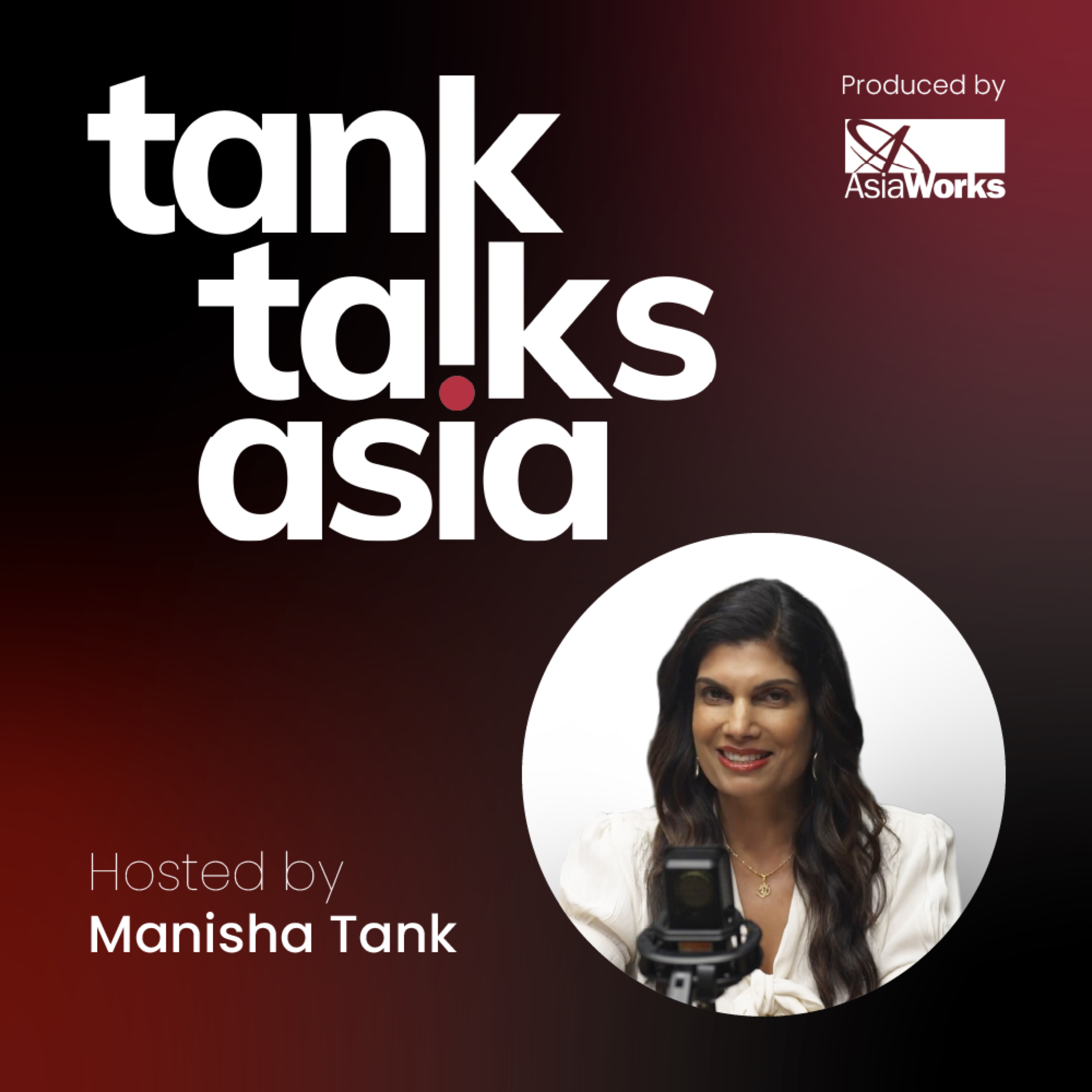
In this very first episode of Tank Talks Asia, Manisha Tank talks to some of the region’s most influential movers and shakers at the Milken Institute Asia Summit in Singapore.
TTA Producer and Milken insider Yeen Chong joins her to offer insights from an event that brings together billion-dollar investors, policymakers, entrepreneurs, and changemakers who are all helping to shape the future of Asia.
Featuring insights from leaders including Curtis Chin, Pandu Sjahrir, Lu Zhang, Steven Ciobo, Chinta Bhagat and more, this episode captures the optimism, urgency, and cultural energy driving what many believe is Asia’s decade.
Manisha and Yeen ask the question why Asia, and why now?
Featured Voices
Host: Manisha Tank
Producer and Co-host: Yeen Chong, Head of Communications, Milken Institute Asia
Voices from the Milken Institute Asia Summit:
- Curtis S. Chin, Chair, Senior Fellows; Senior Advisor, Global Markets, Milken Institute; featured at 5:30 and 22:23
- Pandu Sjahrir, Chief Investment Officer, Danantara Indonesia; featured at 7:41 and 22:27
- Miro Lu, Founder & Managing Director, Perspective Media; featured at 9:25
- Lu Zhang, Founder & Managing Partner, Fusion Fund; featured at 11:18 and 22:17
- Chinta Bhagat, Managing Partner, Aries Holdings; featured at 13:39
- Steven Okun, Founder & CEO, APAC Advisors; featured at 15:14 and 22:05
- Steven Ciobo, Milken Institute Asia Fellow, Former Australian Minister of Trade, Tourism & Investment, & Minister for Defence Industry; featured at 16:11
- Billy Naveed, Founder & Chairman, Young Founders School; featured at 17:48
- Alicia Ng, VP, Head of R&D, Wider Asia, Haleon; featured at 19:34
- Laura Entwistle, Director of Strategic Partnerships; Unheard; featured at 20:58
Key takeaways from our guests
- Asia is no longer emerging — it’s driving global opportunity.
- The region’s diversity is its strength, not a challenge.
- Tech, especially AI, is reshaping every industry from China to Indonesia.
- Immigrant identity is a powerful entrepreneurial fuel.
- Geopolitical tensions require resilience, not fear.
- Growth must be balanced with awareness of ethical and societal issues.
- Culture, community, and family remain central to Asia’s identity.
Don’t miss out
We’re on a mission to bring the real Asia — its thinkers, builders, dreamers, and disruptors — to global ears. So if you know someone who would be a great guest or want to contact the team, please email: tanktalksasia@asiaworks.com
And don’t forget to follow, subscribe, and share so you don’t miss the next episode of Tank Talks Asia.
Tank Talks Asia is an AsiaWorks production
Additional credit
The team would like to extend their thanks to artist, Tay Bak Chiang, whose painting appears behind Manisha and guests in all clips filmed at the Milken Institute Asia Summit.
Transcript
Hello and welcome to the first ever episode of Tank Talks Asia, a labor of love, almost a year in the making. I'm Manisha Tank here at AsiaWorks headquarters in Singapore, our very own studio, whilst it might be my name that's on the tin, there's a talented team making the magic happen. They’re on camera, scripts, talent booking and on research as well. We also have Asia Works own Andrew Clark, who's the co-founder of this podcast, directing behind the scenes and from time to time you might hear him speak up.
Manisha Tank:In this episode, we'll introduce you to another of our team members, Yeen Chong. He's an insider at a famous summit that takes place in Singapore once a year, every year, and we thought, where better to start than at a conference that hosts the region's movers and shakers under one roof.
Manisha Tank:You've gotta be someone to be at the Milken Institute's Asia Summit. If your name's not down, you’re not getting in. And there's a good reason why. There's serious work to do. Some of Asia's brightest minds and biggest wallets network and try to fix global problems by putting money behind good intentions.
Manisha Tank:It was all started by Michael Milken, an American billionaire problem solving for the future. Building on sustainable development goals, investors, NGOs, journalists, and policy makers gather here to talk, take action and share their knowledge.
Manisha Tank:So there you have it, a brief intro into the Milken Institute's Asia Summit.
And over the course of this episode, you're also gonna hear from some of the attendees who helped us explore what they love, what they appreciate about this region. Job well done, Yeen. You know, first of all, I'm so happy that you're at the table. I'm secondly so happy you're on our team. But tell us all a little bit more about you and what it's like curating this amazing conference.
Yeen Chong:Thank you Manisha. And from my part, I'm also really excited to be embarking on this grand adventure with you. I'm Yeen, I'm part of this Tank Talks Asia podcast, and I'm also the head of communication for the Milken Institute in Asia. The Milken Institute is a non-profit nonpartisan think tank, with one mission, which is to build meaningful lives. And we do this in four pillars.
One, it's the finance, philanthropy, health, and where we're based in Singapore, we are, we have, we have presence all across the world, globally. And where we sit in Singapore is the Asia Pacific headquarter. You'll know us from our research, but perhaps like Manisha said, you, you most commonly will know us from our events. The Milken Institute, Asia Summit, which has been happening for the past 12 years now is one of, and,
Manisha Tank:and, and usually F1 weekend, right?
Yeen Chong:That's right.
Manisha Tank:You are very strategic.
Yeen Chong:That's right, that's right. It’s been happening for the past 12 years now. It's one of our largest event, flagship event, within the institute, and it gathers over 1,200, thought leaders, global investors, asset allocators, some of the most iconic, iconic and former thinkers and also a little bit of razzle-dazzle. We have celebrities coming to our event to promote and share more about the cause that they care about at our summit.
Manisha Tank:Okay. Who have been some of your favorite attendees?
Yeen Chong:Oh, there's so many to choose from. I mean, one year we have Michelle Yeoh. We have Henry Golding one year.
Manisha Tank:Yeah, I was there. I was there that year. I remember seeing those. Yeah.
Yeen Chong:Yes. And we have Eric Nam, but I think my absolute favorite would be Ke Huy Quan who is the Oscar winning actor from “Everything Everywhere All At Once.”
Manisha Tank:Okay. Now we asked you to bring a few little mementos of the summit, which you've brought along.
I'm not gonna say what we're gonna do with them yet, because I'm gonna reveal that to you at the end of the show.
Yeen Chong:Sure.
Manisha Tank:Cause there's something special that we're gonna do with them. But we decided to get a space
Yeen Chong:Yeah.
Manisha Tank:At the summit for Tank Talks Asia. And we were able to tap into the amazing array of guests mingling and walking around those halls and we have curated some of those interviews for this episode, and we wanted to ask them, why Asia? Because that's what we are all about on this podcast. Why Asia? Why now?
We had some great conversations. I know you have some favourites. I have some favourites. Perhaps we can get to them. So one of them, and I wanna start with Curtis Chin, who you know well, why don't you tell everybody a little bit about who Curtis is and a bit about his background.
Yeen Chong:Oh, Curtis used to be the former ambassador to the Asian Development Bank representing the United States. After that, he joined us as one of our first fellows for Asia, in which he helped us connect with influential people in the region, government folks across Philippine, Malaysia, Indonesia.
And, and yeah. And, and Curtis, is someone who, who cares passionately about education, about economy, about growth and cares very deeply in Asia.
Manisha Tank:He's also one of the most connected guys I know. His address book is just off the chart. But we managed to check in with him and we talked about why this region and why now, and he had some really interesting things to say. Have a listen.
Curtis Chin:You know, I'm battling to get people to think about Southeast Asia, you know, 'cause they're like, oh, Asia's, China, India, Japan, Korea. There's so much more that's beyond those four amazing nations. Yeah. But even there, I recognize even if I get them to think about Southeast Asia.
People ask me well, why don't you tell them there's a difference between Brunei and Malaysia and Thailand and where do we get to East Timor, you know, the Timor-Leste, which will be the newest member of the Association of Southeast Asian Nations. And so for me it's because, you know, we're very blessed to be able to travel between countries.
You know, most people don't have that luxury, and so what they see is on TV or what they might see in a magazine, but there aren't that many articles. On a Laos, on a Brunei, on a Sarawak. So I wish people in the United States, but really all around the world have a sense of the diversity and the good and the bad, the reality of Asia.
Manisha Tank:That was the ever enthusiastic Curtis Chin. I'm a big fan. I know you are too.
Yeen Chong:Yeah. Honestly, there's so much I can tell you about Curtis Chin, but who better to tell other than himself? You can follow him on Instagram at @asiaminute.
Manisha Tank:I love it. And he always has something really interesting to say about a lot of different things,
Yeen Chong:And he's so good on social media, better than I am.
Manisha Tank:Yeah, if you wanna learn social media strategy, talk to Curtis. Okay. So back to the summit. So there was one guest who was walking around who was on one of the panels that I hosted. Yeah. Who honestly everybody was treating like a rock star.
Yeen Chong:Tremendous panel by the way, Manisha.
Manisha Tank:That is very kind Yeen. Thank you. You know, it's all about the guests. We had amazing guests on that panel. This was the one we were looking at the Asia investment outlook. And I was lucky enough to speak to Pandu Sjahrir , who is
Yeen Chong 7:15
the chief investment officer for Danantara Indonesia, the latest sovereign wealth fund for Indonesia.
Manisha Tank:hundreds of billions of dollars to invest. This is a really, really big deal. You know, we couldn't get from one end of the room to the other walking alongside Pandu without a hundred people stopping him and wanting to shake his hand or give him a business card. So I was really grateful when he sat down with us. Here's what he had to say. Listen to this.
Pandu Sjahrir:Asia now has become what America is. You know, America is a land of dream and a land of opportunity where you can go from whichever you know you are born, and then from you're born you can go up the economic status and achieve somewhere. And now Asia has become that place where you can, within your lifetime, go from somebody that maybe not have a lot of means, into somebody with great wealth.
And there's a lot of great examples happening across countries in Asia, cities in Asia. So you know, what we learned in America, the Great American dream, back in the eighties, nineties, you know, that's where we learned, you know, from my educational background, now it's happening in Asia, in the big cities in Asia.
Manisha Tank:That was Pandu Sjahrir, who is pretty much running things over at Danantara. You know, like I said before we cut to that clip, it's hundreds of billions of dollars that he has to invest. And I think it's interesting 'cause he talks a lot about the United States. It's because he spent some time at Stanford, right?
Yeah. And he has, he has a very interesting history, which again, people can go and do their own research on. And I hope at some stage that we can actually sit down longer form and speak to Pandu.
On that note, you very enthusiastically came over to me with a couple of amazing guests, and just sort of saying, Manisha, you gotta talk to these people. You gotta talk to these people. So one of the, the lovely ladies that I got to talk to was Miro Lu. So, so actually Miro has a very common background to me. I think she was a journalist, right? At some stage.
Yeen Chong 9:12
CGTN correspondent.
Manisha Tank 9:13
Okay. Okay. So she's pretty up on particularly China's AI development. AI has been in the, in the news. It is affecting every industry, all the way from retail to logistics, you name it.
Miro Lu 9:25
There's a lot of emphasis on China's AI development. But at the same time, there's a lot of interesting stories and companies popping up in Korea, in Hong Kong, in Japan, in Southeast Asia. So I feel this is our mission, to tell the world about Asian stories.
Manisha Tank 9:44
Alright, that was Miro Lu. I enjoyed talking to her so much because we have the common background with the journalism, but she's really obviously into tech and technology is gonna be a really big focus for this podcast as well. This is something that is so much part of Asia's future story, so we are gonna be doing that in spades.
Yeen Chong:That's right, exactly. Speaking of technology, it would be remiss if we did not mention Lu Zhang, who's the founding partner of Fusion Fund.
Manisha Tank:
She's a bit of a superstar.
Yeen Chong:
Yeah and she runs a venture capital firm based out of Silicon Valley. That, that is huge on investing in technologies, AI applications on health and whatnot. She even invited me to join the venture capital fellowship that she hosts, and it was a tremendous experience for me.
Manisha Tank:What, tell us a bit more about the experience. You tease us with that. Come on.
Yeen Chong:So I felt really out of depth when I was invited to join because all my peers are people who are joining that fellowship. They're all from Stanford or work for Microsoft. They're product engineers. And I'm here just, you know, alone with no tech background, but
Manisha Tank:Communications guy.
Yeen Chong:I know. I learned a lot about how to read term sheet, how to judge whether a company has growth, what is the runway? How do you put together a proposal deck?
How do you fundraise for your new startup? So all in all, it was a good experience for me.
Manisha Tank:I'm, I'm really glad that you learned all of those things because maybe our podcast is there. I need some of those things. Why don't we listen in to what she had to say.
Yeen Chong:Sounds good.
Lu Zhang:I feel sometimes in Silicon Valley, we are, as I mentioned, there are lots of the global resident here. And then how you really differentiate from each other. I feel one important part is authentic who you are and that strength from your culture really give you the resilience and also the power continue marching forward.
On one side, it's a great ecosystem for innovation, but it's also very, very competitive. And as a minority, as immigrant, as a female doesn't give you lots of the, you know, extra benefit, probably lots of compromise and discount. But that's when I really look back, I'm like a changes time. I'm finding the battle, I'm taking the challenges. So looking back, I really appreciate the strong culture aspect of my personality, where I came from.
I also always have to share my culture with my team, with the people I mingle with. That's kinda the beauty in Silicon Valley, that we are interested in each other, not only on the business perspective, but I also want to get to know your culture, understanding differences.
Manisha Tank:So that's the hugely talented Lu Zhang. I really enjoyed speaking to her. She's a bit of a superstar. I think she sold her first company
Yeen Chong:In her twenties,
Manisha Tank:in her twenties, early twenties. Yeah, so, so I'm slightly in awe of that, but also really irritated by that. I feel so inadequate.
Yeen Chong:Me too. Me too.
Manisha Tank:But you've been learning a lot. Thanks to Lu.That's a great thing. And she also said that some of her immigrant mentality, you know, this really work hard, be efficient, her attitude to, to study, I suppose, in some respects has really helped with her journey in Silicon Valley.
Yeen Chong:And one of the stats that she cites to me is that over 80% of the startup in Silicon Valley has a immigrant founder
Manisha Tank:That is very interesting. From this region?
Yeen Chong:From all over the world. From
Manisha Tank:From all over the world. Yeah. Okay. But I wouldn't be surprised if a lot of them are from Asia. I would love to look at the stats on that. Anyone who's listening, who wants to write in, please do. Let us know what you know. You know, I think it's a really fascinating area.
Speaking of Silicon Valley, that was something that came up in conversation with Chinta Bhagat, I think, you know, Chinta quite well.
Yeen Chong:Yeah. Which is, who is the managing partner for Aries Holding. Someone who has a perspective of that in terms of investment. And he's hugely passionate about the region.
Chinta Bhagat:What I've seen happen over the last 25 years has been a fragmentation and a fragmentation driven by growth. So it's not fragmentation in a bad way, is that each of these countries as they grew into their own and became larger and more and more unique and particular, yeah, started to become big markets of their own.
The number 2, 3, 4 economies in the world are here. And that's China. Japan, China and India, they're all very unique.
Yeen Chong:And in fact, geopolitics has been what's on every investor's mind, for from this region and also from the United States. In fact, when Pandu was on a panel, he said that when he tells his analysts don't plan for the best case scenario, because as human we tend to think we're optimists. We tend to, we, we tend to think about the best case scenario. We have to plan for the worst case scenario. It's not about whether another tariff war will happen, but it's about when. So geopolitics obviously top of mind for all the global investors at the summit.
Manisha Tank:So someone that we got to talk to about geopolitics and who is quite well known in this region to talk about, particularly the relationship between China and the US and the US more broadly, is Steve Okun. I think you know Steve well as well.
Yeen Chong:Yeah. Steve has been a frequent partners for the Milken Institute. He came, in fact this year to speak to our intern, donating his time so graciously and obviously he has years and years of experience. He used to serve on the Clinton administration. And yeah, just well-rounded and very knowledgeable in the geopolitical space.
Steve Okun:As an expat certainly here in Asia, your life is in color and it just, it's exploding in different ways all the time.
And there, you know, China is so different than Southeast Asia, which is so different than South Asia. And then you get that mix of the Europe and North America and Australia all coming here. So it's really hard I mean, it just is so different in, in being here than the US.
Manisha Tank:So that was Steve Okun. Yeen, I wanna switch to another Steve,
Steve Ciobo. Tell us all about him.
Yeen Chong:Steve Ciobo is the Milken Institute, Asia Fellow, but also the former Minister for Trade, Investment, Industry and Defence for Australia. He has been in Australian politics for 15 years. He now works at an alternative investment firm. He's very knowledgeable in geopolitics and trade.
Who better to comment on geopolitics than a former Minister of Defence?
Steve Ciobo:
It's a good pulse check in what is an increasingly fragmented world, although it sounds cliched. Yeah. The reality is that we are seeing, it's becoming more multipolar. We're seeing this great power rivalry between the US and the, and China continuing.
And and I think a lot of people are here to explore what they can find out in terms of what are the trends that flow from that. And what are the areas where there's potential risk that they should be thinking about in three years time, five years time.
Yeen Chong:Alright, and that's Steve Ciobo. I've always been a big fan of Steve, and I hope you are too. Manisha, I wanna turn it to you. Who do you find interesting at the Asia summit?
Manisha Tank:The person I think who stood out to me, Billy Naveed, I really enjoyed speaking with Billy. He told me this amazing story about growing up in Burnley, in Manchester, in the UK, how he was coding at the age of 14. I think he even said that that may have been when he founded his first business. His parents had bought him a computer to keep him off the street and keep him away from doing any nonsense with the other boys in the area.
Yeen Chong:Wow. What does he do now?
Manisha Tank:Well, now he has, he's been in finance for many, many years working, for example, on the wealth management side, but he has founded an NGO, which he's very active with, called Young Founders School, and he wants to turn education on its head for a lot of kids in this region. He says there's not enough imagination that goes into the way that teaching happens in this part of the world. Well, you know, let's listen to what Billy had to say because I asked him about his experiences in Asia and I really loved his response.
Billy Naveed:To me, it's the most amazingly dynamic and vibrant place on the planet. I've seen firsthand the impact and how technology can be an enabler for good in a place like China, and now we're seeing it across many, many other countries. So, the people here, the diversity, the passion, and yet the deep-rooted for me family values that exist here. I think this gonna be Asia's decade.
Yeen Chong:And that's Billy Naveed. Manisha, I have a bone to pick. So when I think about this word, Asia, sometimes I feel like it's a little bit irresponsible.
Manisha Tank:Okay, go on.
Yeen Chong:So, Asia, depending on your definition, it contains or it grows anywhere from 50 to 90 countries, and I just think it's a lot of burden to put it in a four letter word. There's so many cultures, so many population that is included. I understand that you speak to, you just spoke to someone at the summit who also carely and mentioned about this exact issue.
Manisha Tank:Yes. It was Alicia Ng and the great thing was Alicia pointed out just how big this region is. And also the contribution that it makes in growth terms. And you know what, I had to write down her title 'cause it's kind of a long one. So Alicia Ng is the VP, Head of R&D for Wider Asia. And I've never heard that before, Wider Asia. Yeah. Very interesting. At Haleon, so Haleon has spun out is a, is a spin out, forgive me, from GSK. Yeah. Which is the bigger company. They make things like Sensodyne.
Yeen Chong:That sentence is completely new to me, so thank you so much.
Alicia Ng:As you know, like 60% of the world's population live in Asia, and if you just look at three countries, China, India, Indonesia, this is already like almost 40%. So there's tremendous growth potential for a company that's doing business here.
Manisha Tank:So that was Alicia Ng from Haleon. It was really lovely of her to do that for us. Speaking of lovely Laura Entwistle, we both know Laura very well. Yeah. Laura has been a longstanding contributor, supporter of the Milken Institute's Asia Summit. So Laura describes herself as the amplifier of unheard voices. I, were you there for her panel? I hosted a panel.
Yeen Chong:Yeah. I saw that panel. It was fantastic.
Manisha Tank:Okay, so the panel I'm talking about for our listeners and for our viewers is Scam City. This was Escaping Scam City. As much as we talk about the region, and I now stand corrected about the number of countries that we're talking about and how this is a very movable feast when it comes to this place, there it does have its dark sides. And it's unfortunate that these dark sites exist. One of them is this huge problem that we've had with scamming. Yeah. And this is affecting everybody in the region, not just in this region, but we're seeing this impact all over the world.
Laura Entwistle:We follow the story of Micah and Ava. They have also been, you know, guilty of looking for a job. Yeah. And being willing to sacrifice and go abroad to support their families to, to make a living. The story becomes deeply diverted when they are trafficked into a scam compound. That industry is becoming industrialized and professionalized in ways that we can't even imagine. They are of the, you know, a small minority of people that are lucky enough to have escaped that hell.
Manisha Tank:So that was our dear friend Laura Entwistle. So, look, we can't come out of a podcast on the really dark note. Okay. I admit we live lives of duality. There's light and shade.
Yeah. And we need to appreciate that. But we thought we'd have a little bit of fun with our guests and we asked them, you know, you're Asian when… Have a listen.
Steve Okun:I think being Asian says you have a really global view of of the world, and you can look at things much differently and be, you know, multicultural.
Lu Zhang:I am Asian when people challenge me, but I make me very proud of who I am.
Custis Chin:You know you're Asian when you have the best food in the world.
Pandu Sjahrir:At least as when I eat, I don't use spoon and fork. I either use my hand or I use chopstick.
Manisha Tank:That was fun.
Yeen Chong:Yeah, that was, that was fun. Manisha, my turn to ask you. You know you're Asian when…
Manisha Tank:Oh, you, you take your shoes off at the front door.You don't see this everywhere in the world, let me tell you.
Yeen Chong:Yeah, yeah. I agree. But in my household, we have to take our shoes off.
Manisha Tank:
Yeah, I have, I have stacks of shoes by my front door. Okay. What about you? You know you are Asian when…
Yeen Chong:You know you're Asian,when you speak three languages and your parents are disappointed because you're not a doctor.
Manisha Tank:I dunno what your parents are saying about you right now, but like, is this all you've achieved, Yeen? You've just ended up on a podcast?
Yeen Chong:On a podcast, exactly. With the great Manisha Tank.
Manisha Tank:Oh, that's very kind.
Yeen Chong:Yeah, I take a photo, I sent to my mom.
Manisha Tank:He's like, no, no, mom, I'm, I'm a communications guy. And now you can tell her, you can read spreadsheets too, thanks to Lu Zhang.
Yeen Chong:Yeah, exactly. And I'm sometimes funny,
Manisha Tank:We can talk more about this, I think in future episodes. Okay, so Yeen, we asked you to bring some mementos into the studio.
Yeen Chong:Yeah.
Manisha Tank:Show us. What have you got?
Yeen Chong:So first I brought this printed program. Okay. Very nice. From this year's Asia summit, the design is in part inspired by the Supertree from Gardens by the Bay.
Manisha Tank:Oh, very nice.
Yeen Chong:And we have this scented candle.
Manisha Tank:Can I take that home? I like scented candles.
Yeen Chong:Of course. From the 10th Asia summit.
Okay. Two years ago.
Manisha Tank:I'm not actually allowed to take it home. Let me tell you why. So our viewers would have noticed that our studio is a little bit bare 'cause we're just getting started, you know?
And, we thought it would be lovely if our guests and our contributors and our team would bring little mementos to the show and we're gonna put them up on our bare shelves. So help us decorate Yeen.
Yeen Chong:Of course.
Manisha Tank:You can inaugurate our shelves. This is your, your privilege and only yours. There we go.
There you go. Slap it right in the middle there so no one else can put theirs on the shelf. Thank you very much. I don't get to steal the candle. Yeen, this has been fun. Did you have a good time?
Yeen Chong:I had a great time talking to you, Manisha.
Manisha Tank:Okay.
Yeen Chong:Doesn't feel like work at all. We should do this more.
Manisha Tank:That's it for this episode of Tank Talks Asia.
We hope you enjoyed it and you enjoyed all of our reasons to be here. We'll catch you again next time.
Yeen Chong:See you next time.
Manisha Tank:And that is it for this episode. I'm Manisha Tank, from me and the team thank you so much for listening and please don't forget to subscribe and follow Tank Talks Asia. That way you will be supporting our mission to bring you the real story of what's happening here in Asia to the rest of the world. And you will never miss an episode. Tank Talks Asia is an AsiaWorks production.