Episode 10
The World Is Tilting East | Leo Varadkar | Tank Talks Asia
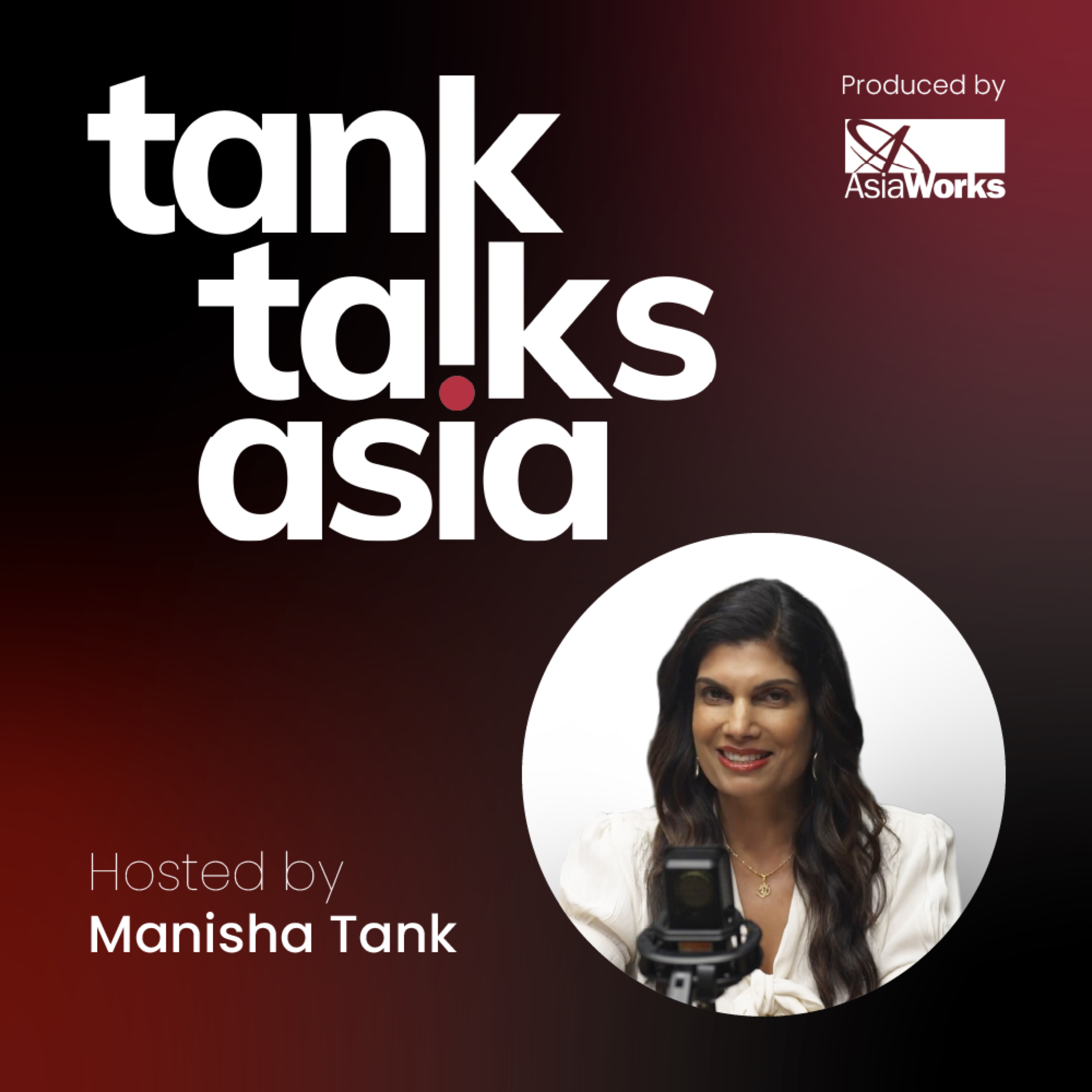
In this episode of Tank Talks Asia, Manisha Tank talks to Ireland’s former Prime Minister Leo Varadkar to discuss leadership, geopolitics and the shifting global order.
Leo talks truthfully about the loneliness of executive decision-making and gives his views on the rise of Asia, US politics under Donald Trump, and how small nations like Ireland and Singapore can navigate great-power competition.
Featured Voices
Host: Manisha Tank
Guest: Leo Varadkar, Former Taoiseach of Ireland, Global Advisor at Penta Group, Senior Fellow at Harvard Kennedy School, Author of Speaking My Mind
Key takeaways
- Leo reflects on how taking leadership decisions at the highest level can be lonely, despite being surrounded by people.
- He says the global order is shifting eastward, but that big-power rivalry will still shape how much countries will actually work together.
- Leo suggests that small nations, like Ireland and Singapore, have benefited from globalization but he expects the coming decades to be less favorable for them.
- He believes the US president sets the global standard for what other leaders view as acceptable behavior.
- Leo emphasizes the need to get AI regulations and interventions right, sooner rather than later.
Chapter heads
01:18 Life After Power
Leo begins by reflecting on his move away from frontline politics and how he’s now enjoying the freedom of a portfolio career.
04:36 Politics in the DNA
Leo says a visit to his father’s hometown in India revealed a family history of political activism that he hadn’t previously fully understood.
07:05 Seize the Moment
He advises new leaders to take difficult and unpopular decisions early, while their political mandate is strongest.
09:10 The Loneliness of Leadership
He points out that leaders may be surrounded by lots of people but, when it comes down to it, responsibility rests on their shoulders alone.
11:10 A Changing World Order?
Leo talks about global fractures but argues it’s too early to declare the end of Western democratic leadership.
12:40 Asia’s Long-Term Rise
He believes economic gravity is shifting east and that Asia and Africa have the power to reshape global growth and influence.
14:19 Understanding Donald Trump
Leo offers his personal take on Donald Trump, noting both his intelligence and charisma, as well as his gaps in knowledge.
16:10 Democratic Norms Under Pressure
He points out that the US president’s behavior can set the tone for how other world leaders behave and act.
18:15 The Spying Game
Leo talks about how some countries use intelligence and espionage to gain strategic leverage over others.
20:38 Small States, Big Similarities
He draws parallels between Ireland and Singapore and discusses how they navigate their place among competing global powers.
24:15 Regulating the Unknown
Leo gives his views on the difficulties of AI and why he thinks it’s important to get the rules and regulations right.
25:40 A Shelf Memento
He finishes the interview by giving Tank Talks Asia a book that explores Irish influence on Singapore’s history.
Useful links
https://www.penguin.co.uk/books/470040/speaking-my-mind-by-varadkar-leo/9781844886937
https://www.jaipurliteraturefestival.org/
Sources
https://www.youtube.com/watch?v=o3nmYG_y9Zo
https://www.youtube.com/watch?v=hNmm5OLBx8c
https://www.youtube.com/watch?v=fsVCOkRgnZ0
https://www.youtube.com/watch?v=AsPqFU3n_vM
Sinead Harper
https://www.youtube.com/watch?v=xy9so3k9z-E
https://www.youtube.com/watch?v=MwjXNIDVI90
Don’t miss out
We’re on a mission to bring the real Asia — its thinkers, builders, dreamers, and disruptors — to global ears. So if you know someone who would be a great guest or want to contact the team, please email:
And don’t forget to follow, subscribe, and share so you don’t miss the next episode of Tank Talks Asia.
Tank Talks Asia is an AsiaWorks production.
Transcript
Leo: One of the paradoxes of politics is you're surrounded by people all the time, you're meeting people all the time, there’s all the people who report to you, but ultimately the big decisions you have to make at the end, and you're responsible for them on your own.
As we say in Ireland, success has many fathers and failure is an orphan. So lots of people will join you and celebrate in your success. If you get it wrong, you hold the can and that's the way it is and that can be quite lonely.
Manisha: From Dublin to the heart of Europe, he led Ireland through a pandemic, Brexit negotiations and the unpredictable diplomacy of the Trump era. He became the country's youngest Taoiseach, its first openly gay leader and a voice for a new generation of Irish politics. Now he is a global advisor at Penta Group and author of Speaking My Mind, chronicling the inside story of his leadership during extraordinary times. We'll explore the lessons he's learned and hopefully get his take on navigating the new world order.
It's Tank Talks Asia. I'm Manisha Tank, a warm welcome from me and the team from the AsiaWorks headquarters in Singapore. In this episode, we’re delighted to be joined by Ireland's former Prime minister, Leo Varadkar.
Leo, welcome to Tank Talks Asia. It's great to have you here. Basic question to begin with. What are you doing here in Singapore?
Leo: I stepped down as Prime Minister of Ireland, as you know, just over a year ago and I'm here with Penta Group. I am on their global advisory board, so mainly sort of meeting clients and giving them advice on the geopolitical situation and the politics in the world at the moment.
But that's something I don't do full-time. I have what they call a portfolio career now, so I'm doing a number of different things. So I'm also a senior fellow at the Harvard Kennedy School in Harvard University in the States, so do a bit of teaching a few weeks a year.
I'm on one or two NGO charity boards, I do get odd jobs all around the place at the moment. I also wrote a book, as you know, so that was published back in September. So it's a very different life to being a full-time, extremely busy politician.
Manisha: Dare I ask, are you enjoying it a little bit more?
Leo: Yeah, I am. I am. It's just so nice to have control over your own time. One of the things, you know, I really like, if it's attending a book festival, if it's attending a conference, if it's attending, even when I'm working in the university, when I was a full-time politician, I was always the act, you know, so I was the person who was always on.
Manisha: Yeah.
Leo: Always answering the questions, always preparing for the next event. And what's really nice is now to have the time to hear other people speak, and you know, be the spectator. So I have much more time now to think and analyze situations than maybe I would in the past. So still very interested in politics and I’m involved in it, but no longer, no longer elected or on any ballot papers and that’s nice.
Manisha: Well, I can promise you that we are going to talk about politics a little bit later in this chat 'cause I think there are lots of questions on which I would like to get your views and opinions. Lots happening in the world to discuss.
Leo: Yes hard keep up with.
Manisha: Yes, indeed. New Year, new world.
You mentioned a book, Speaking My Mind, and you've just been to the Jaipur Literary Festival, how was your experience there?
Leo: It was a lot of fun. It was the first really big literary festival I've attended. I'm probably more of a music festival person than a literary festival one, so I wasn't sure what to expect.
But it was really, really well organized, a really huge event, you know, great talks, there's music as well, you know, so it wasn't just about literature. Some really good parties too in the evening time, and again, it was nice to be able to attend some other events to hear about some other books.
But what was very inspiring really though, was to see certainly thousands of people, if not tens of thousands over the course of the few days, who were attending the festival, interested in books, interested in stories, interested in ideas, interested in history, and a lot of, you know, young people as well. And that was kind of great to see because you'd be forgiven for thinking that everything now is about the short video or the 140 character message. There's still huge numbers of people who are interested in long form, whether it's podcasts or books, essays. So, we're not done yet intellectually, I don't think.
Manisha: So I'm curious, did many people there realize that you have Indian heritage?
Leo: That's hard to answer, you know, but I'm gonna give you my scientific answer now, without having done a survey, how do I really know? There are lots of people recognized me, but probably most people didn't. And those who did maybe 50/50 knew that I had Indian heritage. But then the ones who turned up for my, the two talks I did, you know, obviously had a rough idea, but did the general person who I, you know, walked past, probably not.
Manisha: Well, I'd love to get into that a little bit 'cause I read that, previously when you had been Prime Minister, you had been on an official visit to India and you had an opportunity to go back to the place where your father grew up.
Leo: Yes. Yeah.
Manisha: And you found out that your uncles had been freedom fighters and you had an aunt who marched, I think to Goa, to campaign for the Portuguese to leave Goa, which was a Portuguese territory at that time. How did it feel to learn that you had a political family?
Leo: Yeah. It's kind of funny in a way because my dad would've told me these stories when I was growing up, and either he didn't tell them to me in the right way or maybe I just wasn't listening, so it just never felt very real and I would've always said to people who asked me about my interest in politics and how I got involved, I would always said that my parents were interested in politics. We'd talk about politics at the dinner table. We'd watch the news together, but neither of them were any way ever involved. You know, we weren't a political family.
And it was only really when I was in Malvan, which is a town on the coast of Maharashtra, sort of halfway between Mumbai and Goa. You know, sitting in the council chamber where my uncle had been a counselor, had been the mayor, seeing his photograph on the wall, that actually then became very real.
So two of my uncles are recognized freedom fighters in India, were imprisoned by the British. At one stage the family got into a lot of trouble in the village because my uncle, who was a lawyer, invited the lower caste people to take part in a Hindu festival and that didn't go down well. And the family was ostracized for a while for having done so. And then my Aunt was involved in the march on Goa to get the Portuguese out.
And it just seemed for the first time very real that actually politics and activism and being somebody who has an inner desire to make change happen, is in my DNA. And somehow my dad must have imparted that to me, without me really fully realizing it or accepting it.
But it's only when you're there in the place, that it feels real. So, you know, I'll often meet Irish Americans who come to Ireland and they find the place that their grandparents or great grandparents came from.
Manisha: Oh, extraordinary.
Leo: And they feel a connection to that. And I didn't really understand what that was until I was there.
Manisha: Was there a moment there where you felt sort of at home, like you'd found something that was an anchor point in some way?
Leo: So it wasn't so much a sense of place, it was more a sense of my interest in politics and my commitment to trying to make the world a better place, you know, for fighting for certain causes, wasn't just something that happened by accident. That there was a real heritage there, that I was continuing on.
Manisha: Just ahead. Why it gets lonely at the top.
Well, since you talked about making the world a better place, that desire took you to becoming a Prime Minister at the age of 38. And I think it's so timely because at the time of recording this podcast, we've just found out that in the Netherlands there will be a new Prime Minister and he's just 38.
Leo: Rob Jetten. Yes. Good guy.
Manisha: Yes, yes. So if he were at the table right now, what words of advice would you have for him?
Leo: He'll be the first openly gay Prime Minister of Netherlands. So, we've a parallel in that regard.
I would say to him, do the difficult stuff as early as you can. You start off with a lot of goodwill, a lot of political capital, a strong mandate, that can dissipate quite quickly, so definitely do the difficult things, make the tough decisions, the unpopular decisions early on in your term, if you can, 'cause you mightn’t be able to in the latter half.
Trust your instincts and also don't be afraid to take risks. I'm not a risk adverse person. I took plenty of risks in office and I don't regret the ones even when it didn't work out right. You know, at least I tried to make a certain change or bring a reform across the line. So beware of the abundance of caution.
Manisha: I'm curious about that because I'm wondering when you were in that position, did you know that or are these things that you've learned retrospectively?
Leo: I did know it because, you know, I would've spoken to a lot of people who had held positions in government, for example, and some of them would've said the same thing to me. You know, I remember one of our former agriculture ministers saying to me in college that, you know, he was minister for four years and if he'd known it was only gonna be for four years, he would've made more decisions, taken more risks, tried to achieve more.
I’d the privilege of 13 years in government, so I had a lot more time than he did, so I was kind of aware of it. But there is the other counterbalance as well and that's elections, particularly in my first term, we’d a minority government. So we didn't have a majority in parliament, which meant that an election could happen at any time.
And I had to bear in mind that making an unpopular decision or taking a risk could have been the thing that brought the government down. So you always have conflicting influences and conflicting priorities that you have to take into account.
Manisha: Were any of the decisions you had to make when you were in that position, were they lonely decisions because there's a lot of weight on your shoulders?
Leo: Yeah, there were and, you know, politics, one of the paradoxes of politics, and this is probably true for people who hold senior positions in a business or in any organization, is you're surrounded by people all the time, you're meeting people all the time. There's all the people who report to you, but ultimately the big decisions you have to make at the end, and you're responsible for them on your own.
As we say in Ireland, success has many fathers and failure is an orphan. So lots of people will join you and celebrate in your success. If you get it wrong you hold the can and that's the way it is. And that can be quite lonely. So surrounded by people, but often in a lonely place.
Manisha: Is there anything you miss about being in that position?
Leo: I really don't, and I thought I would because, you know, I didn't make the decision lightly. But I was psychologically prepared for regrets, 'cause you know, it's a tough, you know, you're cutting your own umbilical cord. It's not an easy thing to do, especially when I'd been so actively involved from my early twenties.
Manisha: Are there any FOMO moments where you’ve thought, oh, I wish I was a part of that conversation?
Leo: No, no, maybe for a brief second.
Manisha: Well, speaking of moving on, let's actually talk about Davos.
Leo: Yes.
Manisha: Why don't we just quote Mark Carney's speech? He said, American hegemony and great powers are using economic integration as weapons. The old order is not coming back. He said, we should not mourn it, nostalgia is not a strategy, but from the fracture, we can build something better, stronger, and more just.
It went viral. I'm sure you've listened to it.
Leo: Listened to it twice, I thought it was a great speech.
Manisha: There you go. Reflections?
Leo: It was a really great speech. I actually messaged him afterwards just to say that he spoke that, you know, certainly what he said resonated with me. And I think a lot of people in Europe and around the world too.
nt of rupture now, similar to:I think America is still in play. We just don't know what decision their voters will make later this year, or in two years time. I don't think the relationship with America will ever be the same again, but I don't think America is lost to the West, to put it that way, or lost from the family of democratic nations. It might be, but I don't concede that just yet.
And I think it's absolutely right about middle powers, smaller countries, democracies and liberal democracies around the world working together, not just following the American line in the way we so often did in the past, but that can only go so far.
You know, ultimately you’ve two superpowers, the USA and China, that have nuclear weapons that could destroy the world. Russia could do that too. They have militaries that can strike anywhere in the world within 24 hours. They have multi-trillion dollar economies with enormous power. It's very idealistic to think that a load of countries with less than a hundred million people in them, never mind less than 10 million people in them, can challenge that realistically.
So you know, I agree with him to a point, but I think what he was good on, you know, was calling out how the old order wasn't so perfect.
Manisha: Right.
Leo: And he was spot on, you know, international law was there, but the bigger players didn't have to obey it. And that's clear with America, Russia, and China, among others. And that things like rules around trade were unfairly applied, so it is possible to build something better.
e first few weeks of January,:Leo: Yes.
Manisha: 60% of the world's population and it's almost as if that Mark Carney speech, for a lot of people in this part of the world was, well we've been wanting to say that for ages and somebody finally got up and said it.
Because the viewpoint from this part of the world, I certainly think and a lot of people that I speak to think this as well, it had shifted eastward a long time ago.
Leo: Hmm.
Manisha: Would you agree with that in part or at all?
Leo: It's certainly been shifting eastward for quite some time, you know, depending on how you measure these things, three of the biggest economies, three of the top five economies are in Asia. They're India, China and Japan. That was not the case as recently as 20 years ago.
they will say is, back in the:That's where we're heading. I think we will also see the rise of Africa in our lifetime as well. It's way behind in terms of development, but just as was the case in Asia, rising living standards, rising education levels and a population boom will presage, I think a period of very strong economic growth. So, we might find that this is the Asian century, but maybe the 22nd century will be an African one.
Manisha: Just ahead. What it’s like to negotiate with Donald Trump.
Oh yes. Let's open it up. Let's talk about America. You have met US President Donald Trump previously. How did he strike you?
Leo: I met him three times at the White House, as Prime Minister of Ireland. And also on his visit to Ireland. So we had a lot of one-to-one interaction around those visits and then would've seen him, you know, at bigger meetings where we didn't really get to interact, but was there, UN, World Economic Forum, those type of things.
He is very personable. With the exception of Volodymyr Zelensky, I think everyone who goes to the White House, you know, is treated very well and he's a very good host, certainly very funny, and very engaging.
I think he's a very intelligent person as well. I think his intelligence is often underestimated. You know, you don't get to be President of America twice, and the first non politician since Eisenhower.
Manisha: Absolutely.
Leo: Without some level of smarts, and you definitely see how he's able to speak to people, manipulate people, intimidate them, distract them. You know, these are all skills. What I think is missing, and this is a very dangerous thing in many ways, is knowledge and curiosity. So it's a very strange, unusual combination of intelligence, but a lack of knowledge.
Manisha: Is the worry then that that void of knowledge gets filled? So this is what a lot of people are worried about in America.
Leo: It could be filled with the last person you spoke to, the last thing you saw on Fox News or conspiracy theories that we're seeing online. And that's what's, you know, pretty frightening, you know, even the belief that he appears to have about a white genocide in South Africa.
Like, again, I was in South Africa in the last couple of weeks, you know.
Manisha: Yeah. I saw your beautiful pictures.
Leo: The white people I saw in Cape Town were living pretty well, you know? Not sure they’d live so well in the United States, quite frankly, but that's one of those kind of crazy conspiracy theories that's quite popular online. And then for the President of the US to believe that, and articulate it, is really worrying.
Manisha: That's a really interesting perspective because people are rushing to understand, not only the US President Donald Trump, but also what is happening in America at the moment, because there are a lot of things that we're seeing on our TV screens and that we are hearing about or reading about that are really surprising.
Do you get questions? I mean, obviously from the Kennedy School, do you get questions from students around things like that? Do you get questions through Penta Group from potential clients? What are people asking?
Leo: I do because geopolitics is such a big influence on our lives and on business and who is president of America is really important in so many different and subtle ways that mightn't be apparent.
So I think in many ways the president of the US sets the tone as to what's appropriate to say, how it's appropriate to behave, how other leaders can act.
Before President Trump, there were exceptions, but you would've been reasonably confident that if somebody tried to steal an election or refused to accept an election result, that they would've trouble with America and the broader America and its allies, you know, including Europe and Singapore and so on. That's not so apparent now.
So you know if you're President Erdoğan in Turkey, or you’re Prime Minister Orbán in Hungary, or you’re Prime Minister Netanyahu in Israel delaying elections or trying to manipulate elections or not accepting the results of election, is now acceptable behavior.
Manisha: Yeah. And it's very much a sort of, if it's all right for America, then it's all right for us.
Leo: Yeah.
Manisha: Is that something that we should be concerned about?
Leo: I think we have to be and, you know, Ireland is an English speaking country, like Singapore. We have our own Irish language, but English is the language of business and the everyday language that we use in communication. So anything that happens in America spills into Ireland. Anything happens in the UK spills into Ireland too.
And a lot of the debates have become very polarized. You know, it's almost as if you have to pick set menu A or set menu B, you know, the a la carte has disappeared and you know, people have complex views. You don't have to be on side A or side B, you can actually have different views on different things, and that's becoming harder and that’s definitely a worry I have..
Manisha: One last question on geopolitics. So, Keir Starmer has taken a delegation to Beijing. This is the first time this is happening since Theresa May was the Prime Minister of the UK. It's been really interesting, but something that's making a lot of headlines is the fact that they've taken burner phones with them and there's been a lot of talk about potential espionage.
Now this has really fascinated me, because I think, in history, there has been a lot of talk around this in Ireland. It was once written up as being a place where it was very easy for the Russians to spy on people.
Leo: Not just the Russians.
Manisha: Okay, not just the Russians.
Leo: The British and others, Americans, Israelis also have that capability. I'm sure they wouldn't use it.
Manisha: I think it illustrates the fact that you were able to reel off so many countries there, that this is a thing. Espionage. What is this all about? And why are we all spying on each other? Why is it still happening? Why are we still stuck in a spy movie?
Leo: I don't know to what extent it happens, but it certainly does happen and there's all forms of espionage, everything from traditional spies, to people being able to read your emails and hack your computers. And look, I think it's down to the fact that information is power. If people know what you're saying, what you're hearing, what you're reading, they have enormous..
Manisha: Leverage.
Leo: Leverage over you, so that's why it happens. And a lot of states have this capability. Now, I always took the view when I was in office, particularly when we were negotiating around Brexit with the UK and that was a very difficult time.
I took the view that the UK had the capacity to hear what we were saying and to read our emails. I don't know if they used it or not, but they certainly had the ability to do so and we took the view as a government, and I took the view, that as a consequence that we wouldn't have any secret strategies. We'd actually be very clear as to what our red lines were and what our negotiating objectives were, so that there was nothing there to discover, if that made any sense.
So that was probably the low tech solution to these things. It might be different in other circumstances. In the past if Irish ministers had gone to China, that they would've taken second phones or burner phones as well, and be careful about what software they downloaded on them.
I'm now in a much freer position so when I went to China back in November, I just brought my regular phone and I downloaded WeChat and all the rest of it. And if the Chinese Communist Party want to hear my views, you know, they're very welcome to.
Manisha: You're keeping it upfront and honest.
Coming up. The big picture for smaller nations.
Let’s talk a little bit about Ireland. I wanna talk about similarities between Ireland and Singapore, because we're talking about small nations, and I wondered how do small nations navigate this new world order that we've already been talking about?
And what would you say were some of the similarities that you've learned over the years between Singapore and Ireland?
Leo: There's actually a lot, you know, both island nations, both about five and a half million people, both have a history of British rule, which left us some good things. So our model is very similar to yours in terms of our courts, common law, parliamentary democracy, a president that is ceremonial, not executive.
And then I think the other very definite similarity is the way we run our economies. Neither country has huge amounts of natural resources. We have some land and sea, so do you, but you know, not oil, gas or gold or diamonds or anything of scale. So we've had to rely on our human capital and our people and on exports in particular to bring about prosperity.
So, you know, investment in education and talent, welcoming people in from outside where we've got skill shortages and talent, being open to trade, having a pro business, low tax environment, and then also trying to work within our region.
So in the same way we work within the EU, Singapore works within ASEAN and then also trying to have good relations with pretty much everyone, which is easier for a small country than a big one. So, you know, there's a huge number of policy similarities.
Manisha: Actually just picking up on that last point, you know, so Singapore absolutely has to sort of walk this rope between sort of the west and the east to some extent.
And, you know, people have referred to it when I've talked about living in Singapore. They've said, oh, it's like Asia light. That's what they tell me. It's like, no, Asia is Asia.
Leo: It's very definitely Asia.
Manisha: But I think there are also similarities, you know, because you've got Ireland. You've got the US on one side, you've got the EU on the other side, and of course the UK.
Leo: Yeah. So we're kind of in the middle of that Venn diagram.
Manisha: It's sort of the balancing point of the seesaw in a way.
Leo: Yes and, you know, I described it as a sweet spot, you know, in a period of globalization places like Ireland and Singapore have benefited enormously, precisely because we've been able to be in that place, you know, between the west and between Asia for Singapore, and then the overlap, if you like, of Europe and America for Ireland.
And Ireland is the headquarters of a lot of US companies, EMEA operations, and that's created a lot of jobs and also a lot of revenue, which we've then been able to invest in the country. I think the next 20 or 30 years aren't going to be as favorable for our countries, quite frankly. It's unlikely.
Manisha: Why is that?
Leo: Just the changes in the world and the move away from multilateralism towards great power competition, increased protectionism, not just by the US, it's most evidenced by the US, but you know, even the European Union is becoming more protectionist in some ways and again, the role of China in very much putting its self interest first and the rise of nationalism generally.
So I think the conditions or environment for us in the next 20 or 30 years won't be as favorable as the last 20 or 30, but that doesn't have to be a disaster. We had a period of 25 years of quite rapid growth in Ireland and Singapore.
Manisha: Yeah.
Leo: What we might see for the next 20 or 25 years is trying to consolidate that prosperity.
Manisha: Coming up. Why AI is a problem.
Ireland's tech sector has been a major growth engine. So you have the likes of Microsoft, Google, other big names that have European hubs there.
It seems like it would be very ahead of the curve given the transition to the AI world. But do you think there are any risks there around the ethical issues to do with AI?
Leo: I think the difficulty around AI is that it's very unclear to me what you actually regulate. You know, you can regulate the chips, you can regulate the algorithms, but I think a lot of what we're gonna find ourselves doing, is going to be reactive. It's only when issues get thrown up, that we'll be able to deal with them.
Manisha: Do you think one of the reasons we may end up being quite reactive is because not enough people really understand the technology and how it gets developed?
Leo: Yeah. And that's true. And I think that was also true when it came to social media, you know, it was quite late in the day that I think most of us fully understood the risks to children, for example, and developing minds around getting hooked on their phones, and then also the way the algorithms work.
People often talk about free speech and what you see online is not free speech. You know, we are fed information and that's individualized and it's based on algorithms, you know, free speech is where everyone can speak freely in the town square, it's not where some people have their voices amplified and other people have them muffled. And that's what's happening essentially with the algorithms.
So I think definitely with AI we need to be smarter and more agile than we were with social media and try and make sure that we get the regulations and interventions right earlier.
I don't know everything about the technology, but one way to deal with that is to turn off the recommended algorithms.
Manisha: Yeah.
Leo: So instead of it being fed stuff that you might like, because the algorithm knows what you like. It would be like the old days where you went onto a search engine and could only find the things that you actually looked for.
Manisha: Yes, exactly. You would explore your own curiosity.
So Leo, before we let you go, we always ask our guests to bring a little memento into the studio so we can remember you by something and it will go here on our highly elevated shelves. I see that you have a book in your hand.
Leo: Yeah, so the book is entitled An Irish Tour of Singapore.
Manisha: That's perfect.
Leo: It was actually given to me last time I was here by our ambassador, Sarah McGrath, and it was written by a woman called Rosemary Lim and it talks about all the Irish people who were here in Singapore in the early days.
Manisha: Do you remember any cute facts from the book?
Leo: Well just some of the roads, for example, and the people in Singapore mightn’t know this but it would be very obvious to any Irish person, that Connaught Drive, Mayo Road, Cavan Road. I think when we say Killiney, you call Killiney.
Manisha: Yes.
Leo: These are all place names in Ireland, called after people who, either were Irish or of Irish background, who came here to Singapore in the early years and were part of building this place.
Manisha: Thank you, that is a very thoughtful memento and it will take pride of place, I'm sure, on the shelves. And I'm gonna grab it and have a good old read.
Leo: No, it’s interesting, a good read.
Manisha: Good stuff. Thank you.
Well, I have to say as someone who is so interested in international relations, it was great to get that look behind the curtain with Leo.
That's it though for this episode. I'm Manisha Tank, from me and the team, thank you so much for listening and please don't forget to subscribe and follow Tank Talks Asia. That way you'll never miss an episode.
Tank Talks Asia is an AsiaWorks production, and the views and opinions shared by our guests are their own.